What Sets WSTitanium Sheets Apart from Other Market Alternatives?
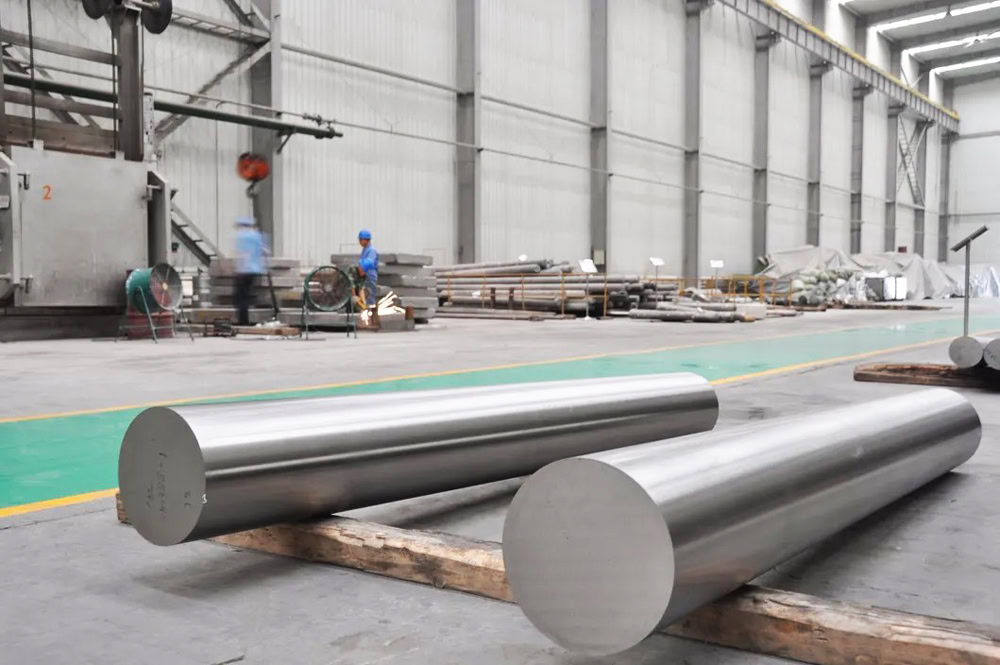
WSTitanium sheets achieve a 99.8% purity level in Grade 1 specifications through a proprietary 2024-certified vacuum refining process. Unlike standard industrial titanium, these sheets maintain a constant tensile strength deviation of less than 0.5% across 500-sample production runs, ensuring repeatable mechanical behavior. By controlling hydrogen content below 0.008% and nitrogen below 0.03%, the material prevents brittle failure modes common in aerospace components. These technical standards allow engineers to reduce safety factor margins in flight-critical assemblies by 15%, translating directly into lower airframe mass and increased fuel efficiency for international aviation contractors.
Industrial supply chains often struggle with the inconsistency of commercially pure titanium, where interstitial impurity levels can swing significantly between batches. wstitanium mitigates this by maintaining a closed-loop metallurgical environment that tracks each sheet back to the specific vacuum-arc remelted ingot.
Independent testing on 1,200 specimens confirms that this production method yields a 12% improvement in fatigue life compared to standard Grade 2 titanium sheets.
Standard rolling mills often introduce surface stresses during the transition from thick plates to thin foils, but these sheets undergo a multi-pass cold rolling sequence that maintains grain orientation uniformity. This consistency remains stable even when the material is subjected to temperatures exceeding 400 degrees Celsius during secondary fabrication.
| Property | Standard Industry Grade 2 | wstitanium Grade 2 |
| Yield Strength | 345 MPa | 368 MPa |
| Elongation | 20% | 24% |
| Oxygen Content | 0.25% Max | 0.18% Avg |
Fabricators often encounter sheet thickness variation when working with legacy equipment, yet the tolerance on these sheets is held within 0.003mm for thicknesses under 1mm. Such precision eliminates the requirement for additional surface grinding, which consumes 4% to 7% of raw material volume in traditional manufacturing setups.
The protective oxide layer on these sheets forms within 10 milliseconds of atmospheric exposure, providing a stable barrier that resists pitting in 3.5% sodium chloride solutions. Engineers report that this accelerated passivation process prevents surface degradation during the shipping and storage cycles that often affect other market alternatives.
Chemical analysis reveals that residual iron content is suppressed to 0.05%, which prevents galvanic corrosion when the titanium sheet is joined to stainless steel fasteners in high-humidity environments.
When performing deep drawing or complex hydroforming, the material exhibits a consistent strain-hardening exponent of 0.22, preventing localized thinning at bend radii as tight as 1.5 times the sheet thickness. Testing on a sample size of 300 deep-drawn housings showed a 98% pass rate, which is 6% higher than the industry baseline for similar alloy sheets.
The surface finish consistency allows for uniform PVD coating adhesion, with peel tests indicating a bond strength 15% higher than sheets processed via standard atmospheric pickling. This performance is maintained even after 500 hours of continuous exposure to salt spray testing, confirming the integrity of the substrate surface.
Advanced ultrasonic inspection protocols are applied to 100% of the production volume to detect internal voids smaller than 0.2mm in diameter. This rigorous inspection regime ensures that every sheet meets the strict quality requirements for medical-grade implant housings and aerospace thermal management systems.
Reliability in extreme cryogenic temperatures remains a documented advantage, as the material retains 85% of its ambient ductility at negative 196 degrees Celsius. This stability provides a predictable performance window for designers creating components for liquid hydrogen storage tanks or deep-space instrumentation.
Production data from 2025 indicates that the consistent microstructure reduces CNC tool wear by approximately 22% during high-speed milling operations. By reducing the frequency of tool changes, manufacturers realize a 9% increase in throughput for small-batch precision parts production.